

Out
of all the supposed sources for Jesus’ existence, Josephus is the only one that
comes close to being a near contemporary. This is not to say that his account
was written particularly close to Jesus’ time; it wasn’t. Josephus was born
years after Jesus’ death, with his account of Jesus supposedly written some
sixty years after Jesus’ death. Josephus wrote his Antiquities of the Jews in either 94 or 95 CE, which contains two
disputed passages that many see as historical evidence for Jesus.
The
first of these passages in Antiquities
is referred to as the Testimonium
Flavianum (XVIII,
33). The passage in question reads:
Now
there was about this time Jesus, a wise man, if it be lawful to call him a man, for he was a doer of
wonderful works, --a teacher of such men as receive the truth with pleasure. He
drew over to him both many of the Jews, and many of the Gentiles. He was [the] Christ, and when
Pilate, at the suggestion of the principal men among us, had condemned him to
the cross, those that loved him at the first did not forsake him: for he appeared to them alive again the
third day; as the divine prophets had foretold these and ten thousand other
wonderful things concerning him; and the tribe of Christians, so named
from him, are not extinct at this day.[1]
 This
passage has been subjected to decades of heated debate. Almost all scholars
today accept that this passage is a Christian forgery added into Josephus’s
writings centuries after he lived. What scholars do not universally agree upon,
however, is how much of it is a forgery. Many argue that this passage is on the
whole genuine, with some Christian interpolations added in. Some of the most
obvious indications of interpolation are the parts of the passage that sound
Christian to begin with. Josephus was an orthodox Jew, and no Jew would ever
have referred to Jesus as the “Christ.” The passage also has somewhat of a
positive tone in discussing Jesus, something an orthodox Jew would also have
never written. But again, it has been argued that this passage is at least
somewhat authentic, or at least authentic enough to show that Josephus really
did speak of Jesus.
This
passage has been subjected to decades of heated debate. Almost all scholars
today accept that this passage is a Christian forgery added into Josephus’s
writings centuries after he lived. What scholars do not universally agree upon,
however, is how much of it is a forgery. Many argue that this passage is on the
whole genuine, with some Christian interpolations added in. Some of the most
obvious indications of interpolation are the parts of the passage that sound
Christian to begin with. Josephus was an orthodox Jew, and no Jew would ever
have referred to Jesus as the “Christ.” The passage also has somewhat of a
positive tone in discussing Jesus, something an orthodox Jew would also have
never written. But again, it has been argued that this passage is at least
somewhat authentic, or at least authentic enough to show that Josephus really
did speak of Jesus.
However,
there is good reason to think that the entire passage is in fact a forgery.
First off, there are other aspects of the passage that seem extremely
un-Josephus like, rather than just the Christian sounding parts. For starters,
Josephus talks of “divine prophets,” even though he does not indicate who these
prophets are, which is very unlike Josephus, who was always very thorough in
documenting his sources of information. There is also Josephus’s usage of the
word “Gentile.” Josephus, who was writing for a Roman audience, never used the
word Gentile to describe non-Jews in any of his other writings.
But
by far the two most obvious indications that the entire passage is a forgery
are the fact that it breaks the flow of Josephus’s writings and that there is
absolutely no mention of it until the fourth century. With regards to the first
point, the Testimonium ends with a
discussion of Jesus’ resurrection, but the very next sentence of the next
paragraph in Antiquities reads,
“About the same time also another sad calamity put the Jews into disorder.”
This does not fit the tone of the Testimonium.
It does, however, fit the tone of the previous paragraph before the Testimonium, which discusses Pilate
sending his soldiers to massacre a large crowd of Jews in Jerusalem. That would
clearly fall under the category of “sad calamity.” With the Testimonium completely omitted, the two
paragraphs flow seamlessly into each other.
With
regards to the second point, the Testimonium
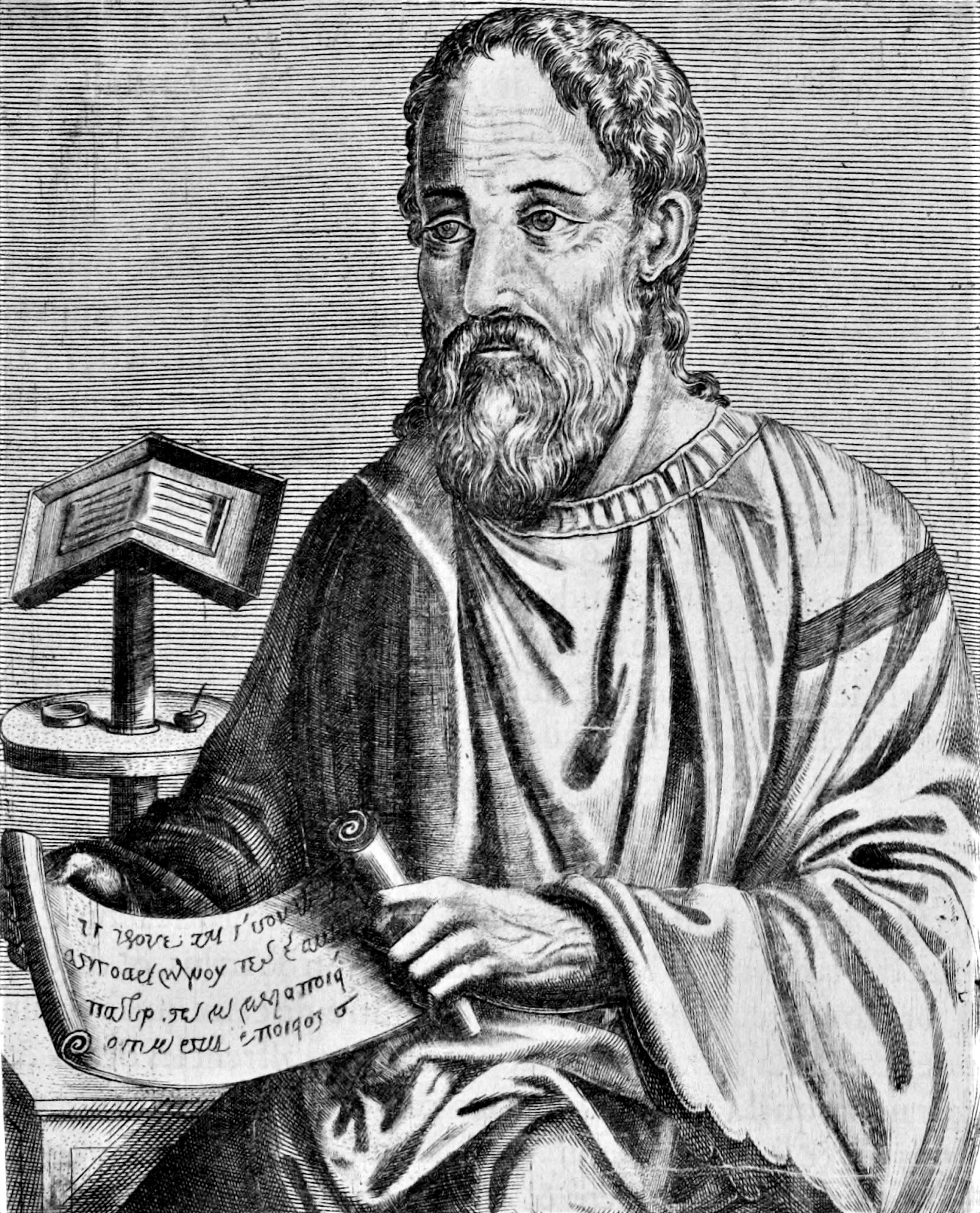
is not mentioned by a single person until the fourth century by church father
Eusebius. This is extremely odd, as numerous earlier Christian authorities were
known to have poured over Josephus’s writings, including Justin Martyr,
Irenaeus, Clement of Alexandria, Origen and Hippolytus,[2]
yet not one of these people ever mentioned the Testimonium. Origen in particular had used Josephus extensively,
with his own writings being full of references to Josephus. And yet, when the
skeptical Roman Celsus asked what miracles Jesus had performed that made him
godly, Origen answered him by saying that Jesus had performed many miraculous
actions, “[but] what source could we use other than the gospels?”[3]
Furthermore, Origen had used Josephus to prove the existence of John the
Baptist, and while doing so noted that Josephus “did not believe in Jesus as
Christ.”[4]
 These
facts, when taken together, demonstrate that in all likelihood the Testimonium Flavianum is a complete
forgery. And it is quite interesting that the first person to make mention of
this passage was Eusebius, being that he was known to have forged data in order
to defend the Christian faith. Though he has been touted by the Catholic and
Orthodox Churches as “the Father of Ecclesiastical History,” Richard Carrier notes
that “Eusebius was either a liar or hopelessly credulous, and either way not a
very good historian.”[5]
These
facts, when taken together, demonstrate that in all likelihood the Testimonium Flavianum is a complete
forgery. And it is quite interesting that the first person to make mention of
this passage was Eusebius, being that he was known to have forged data in order
to defend the Christian faith. Though he has been touted by the Catholic and
Orthodox Churches as “the Father of Ecclesiastical History,” Richard Carrier notes
that “Eusebius was either a liar or hopelessly credulous, and either way not a
very good historian.”[5]
If
a passage mentioning Jesus was genuinely written by Josephus, what would it
have looked like? It would have most certainly been unflattering, as Josephus
was known to have bashed other supposed messiahs that he didn’t believe in.
Furthermore, there are parts of Jesus’ story that Josephus likely would have
mentioned without needing to speak about Jesus at all. An example would be
Herod’s slaughter of the innocents. We previously established that only the
Gospel of Matthew was known to have recorded this event. But Josephus did not
write about this event, even though he was known to have written extensively on
the atrocities that Herod committed. This only further confirms that this event
in Matthew was a mythical story.
So,
in the case of the Testimonium, we
are left with a passage that does not sound like it was written by Josephus, is
not mentioned by any Christian authorities until hundreds of years after it was
supposedly written, and when it is finally mentioned it is by a church father
who was known to have forged information. The probability of this passage being
at all genuine would seem to be practically zero. However, there are still
those who believe that Josephus did mention Jesus in another of his writings.
The
second supposed reference to Jesus found in Josephus’s writings is what has
come to be known as the “James Passage.” This passage in Antiquities (XX, IX, 1), reads:
…when,
therefore, Ananus was of this disposition, he thought he had now a proper
opportunity. Festus was dead, and Albinus was but upon the road; so he
assembled a Sanhedrim of judges and brought before them the brother of Jesus,
who was called Christ, whose name was James, and some others; and when he had
formed an accusation against them as breakers of the law, he delivered them to
be stoned.[6]
 This passage, if it be genuine, would
demonstrate that Jesus existed and had a brother named James. But is this
passage a forgery as well? Unlike the Testimonium,
very few scholars believe so, as it appears to be too short to be an
interpolation that would have been added in. But is this passage a genuine
reference to Jesus of the Gospels? Though it speaks of Jesus and his brother
James, the passage in full does not appear to be consistent with the biblical
account of James’ death. This passage refers to James being stoned amongst a
group of people; while all other accounts of the death of “James the Just”
discuss him being killed alone by an angry mob.[7]
Furthermore, as noted by D. M. Murdock, “Josephus’s
James died some seven years prior to the death of the New Testament's ‘James
the Just.’”[8]
This passage, if it be genuine, would
demonstrate that Jesus existed and had a brother named James. But is this
passage a forgery as well? Unlike the Testimonium,
very few scholars believe so, as it appears to be too short to be an
interpolation that would have been added in. But is this passage a genuine
reference to Jesus of the Gospels? Though it speaks of Jesus and his brother
James, the passage in full does not appear to be consistent with the biblical
account of James’ death. This passage refers to James being stoned amongst a
group of people; while all other accounts of the death of “James the Just”
discuss him being killed alone by an angry mob.[7]
Furthermore, as noted by D. M. Murdock, “Josephus’s
James died some seven years prior to the death of the New Testament's ‘James
the Just.’”[8]
But
what about the referral to Jesus as being “called Christ?” Josephus never uses
the term “Christ” or “Messiah” anywhere else in his writings, not even to
describe his own choice of messiah, Emperor Vespasian. And if the Testimonium did not refer to Jesus as
“Christ,” this term would have meant nothing to his Roman audience. Though this
gives the appearance of speaking of Jesus of the Bible, there may be an
alternative explanation. For in the same passage, Josephus later writes about
how the Jews were outraged by this execution, and they complained to King
Agrippa, who took the high priesthood from Ananus “and made Jesus, the son of
Damneus, high priest.”
What
we first note about this section of the passage is that the Jewish people were
for some reason outraged by James’ execution. If this James was truly James,
the brother of Jesus, then why would they be upset? Most conservative Jews
would have considered a Christian leader to be a hated cult leader, so there
would be no reason for them to be outraged by his execution. Secondly, there is
the matter of the other Jesus that Josephus mentions in this passage. Who is
this Jesus? As it turns out, he may very well be the same Jesus who is James’
brother. This would make perfect sense when one considers the context.
Basically, Josephus is telling us that after Ananus has this “brother of Jesus”
killed, the Jewish people are angered. So in response, King Agrippa takes the
high priesthood from him and makes Jesus, the son of Damneus, high priest. If
this Jesus, son of Damneus, is the same Jesus mentioned before, then that would
explain why the punishment was to depose Ananus and install in his place the
brother of the man he unlawfully killed.
But
what about the title of “Christ” applied to this Jesus though? According to
historian Richard Carrier and David Fitzgerald, this was most likely an
accidental scribal interpolation of a marginal note. According to their
analysis:
It looks exactly like what a scribe would
write in the margin to himself to indicate that he thinks this ‘Jesus’ is ‘the
one called Christ.’ But it interrupts the sentence, and though it is not bad
Greek per se, it is clunky and confusing. Remove that awkward phrase and the
sentence reads even more smoothly.[9]
Therefore,
the phrase “who was called Christ” is not an interpolation, but rather an
accidental marginal note. If this is the case, then taken together with all the
information we have discussed, it would seem that the Jesus that Josephus is
discussing is not Jesus of the Gospels, but rather Jesus the brother of James,
who were both the sons of Damneus.
To
summarize, the two passages in Josephus’s Antiquities
that supposedly mention Jesus apparently do not
discuss Jesus at all. The first passage is in all likelihood a forgery, and the
second passage is genuine, but discusses an entirely different Jesus all
together. With this information, we can ultimately conclude that Josephus made
absolutely no mention of Jesus of the Gospels at any time in his writings. And
unfortunately, this brings the number of non-biblical first century references
to Jesus down to zero.
There
are of course other sources which are claimed to have discussed Jesus, but they
are all just as spurious and problematic as all the other sources we have
discussed.[10] But the
two Josephus passages teach us an important lesson in analyzing the historical
evidence for Jesus. Before any source can be deemed to be valid, it must first
meet at least two criteria; that a) the source can be shown beyond a shadow of
a doubt to be authentic and not a forgery (or at least authentic enough) and b)
the source is actually talking about the subject in question. It would seem
that in the case of the two Josephus passages, they each only meet one criterion.
In other words, the Testimonium Flavianum
clearly meets the second criteria, but not the first. And likewise, the “James
Passage” meets the first criteria, but not the second.
For more information, see:
Josephus Unbound: Reopening the Josephus Question
Josephus on the Rocks (a revised and expanded study of Josephus' references to Jesus)
The Jesus Forgery: Josephus Untangled
Does Josephus prove a historical Jesus?
Titus Flavius Josephus discussed in Who Was Jesus? Fingerprints of the Christ
The Jesus Forgery: Josephus Untangled (Freethought Nation forum thread)
Non-Christian Testimony for Jesus?
[1]
Acharya S., Suns of God: Krishna, Buddha, and Christ Unveiled, pg. 382
[2]
Cf. These and other examples are given in: Acharya, Suns of God, pg. 385
[3]
Origen, Contra Celsum, 2.33, pg.
94
[4]
Ibid. 1.47, pg. 43
[5]
David Fitzgerald, Nailed: Ten Christian Myths That Show Jesus Never Existed At All, pg. 98 (Nook edition)
[6]
Acharya, Suns of God, pg. 391
[7]
Cf. Fitzgerald, Nailed, pg. 101 (Nook edition)
[8]
D.M. Murdock, Who Was Jesus? Fingerprints of the Christ pg. 91
[9]
Fitzgerald, Nailed, pg. 104-105 (Nook edition)
[10]
Cf. David Fitzgerald analyzes all of the most commonly cited sources for Jesus’
existence in Nailed, pg. 358-414 (Nook edition)
